
Little River Jerseys: A Family Legacy of Breeding, Resilience and Progress
By Pam Goodin
From the Jersey Focus March 2026 issue
Tucked beside the Awaiti Canal on Awaiti Canal Road near Paeroa, Little River Jerseys is a dairy operation where history, family commitment and a passion for Jersey genetics come together. The Brewster family have developed a herd that not only performs commercially but has also contributed valuable genetics to the wider Jersey industry.
The name “Little River” reflects both the heritage and geography of the property. The farm sits alongside the Awaiti Canal, which carries water to the Piako River and the Firth of Thames. Prior to the formation of the canal system, the Awaiti Stream ran through the land. Now only traces of it can be seen weaving through the farm after the area was drained post WWI to create the now fertile farmland that exists today. The Māori meaning of “Awaiti” translates directly to “little river,” providing a natural inspiration for the herd name.
Little River Jerseys occupies a 115-hectare milking platform supported by two runoff blocks of approximately 25 hectares each. One runoff is located just 200 metres from the home farm, while the second sits about four kilometres away. The farm itself is owned by Little River Farms Ltd, with Philip and Janna Brewster holding a 40 percent shareholding and Philip’s parents, Angela and Murray Brewster, owning the remaining 60 percent.
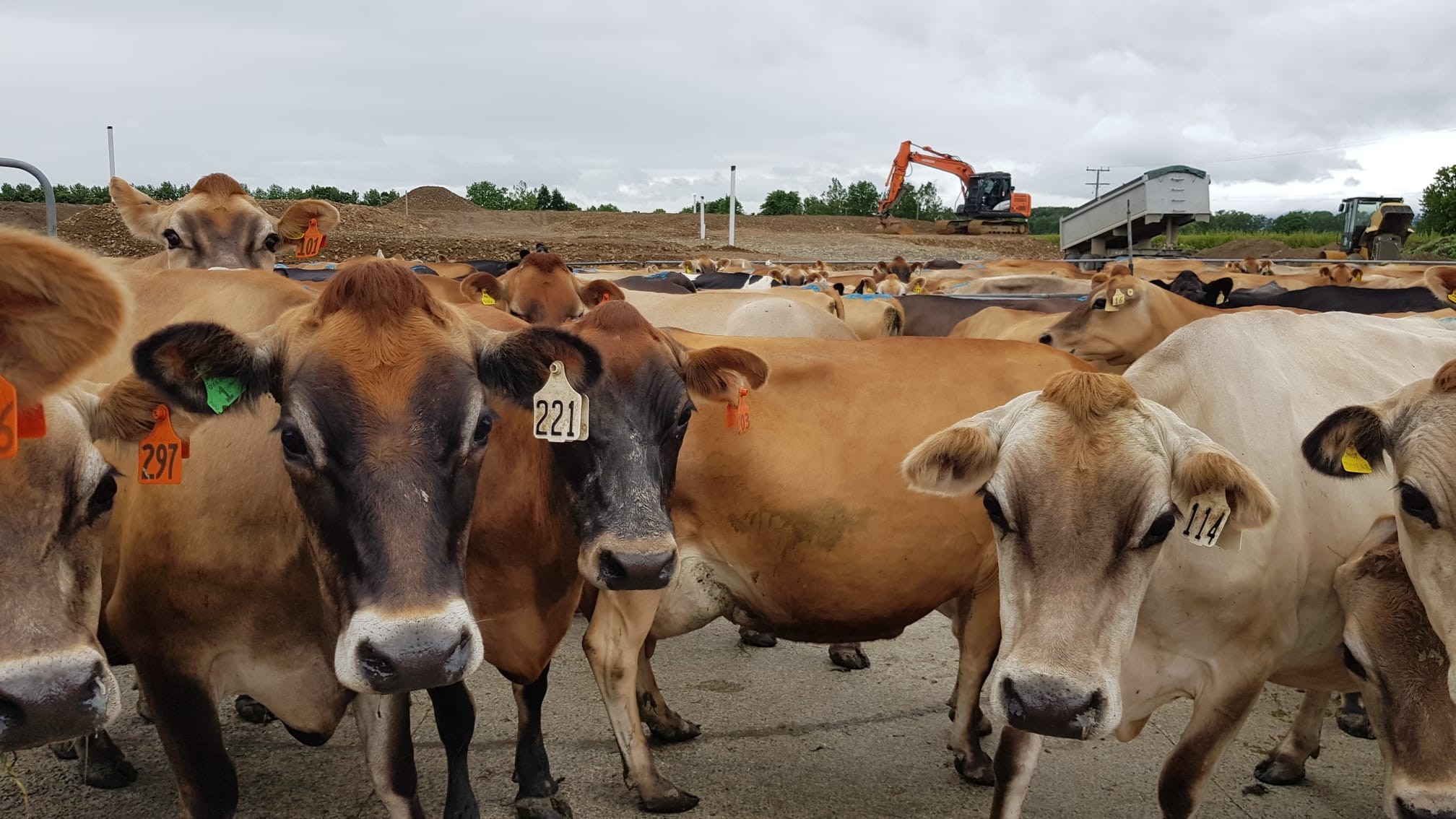
Herd with new shed development in rear
The operational side of the business runs through PJ Ag Ltd, the sharemilking company owned by Philip and Janna. Both entities also hold shares in the second runoff block, reflecting a collaborative and evolving business structure designed to support both generations.
Philip and Murray carry most of the daily milking responsibilities, while Angela plays a key role during the busiest parts of the season, particularly calving and mating. Once summer arrives and the herd transitions to once-a-day milking around Christmas, Angela steps back into more of a relief role while Murray focuses on infrastructure and maintenance work around the property.
One of the biggest developments currently underway at Little River Jerseys is the planning of a new milking shed. The Brewsters intend to construct a 40-bale rotary shed designed with labour efficiency in mind. The new facility will include on-deck teat spraying; semi-automatic drafting; an automatic wash system; and infrastructure that allows for the future installation of cow collars and additional technology.
Construction is expected to begin within the next six months, with the Brewsters hoping the new facility will be operational by Christmas 2027. The shed will be built adjacent to the current one, with entirely new yards installed at the same time.
The existing shed has served the farm well but has reached the limits of its capacity. Originally built as a walk-through shed in the 1960s, it was later converted to a rotary in the 70s and subsequently extended to 22 bails in the 90s. While the upgrades have allowed the farm to keep growing, the new shed will provide the space and efficiency needed for the future.
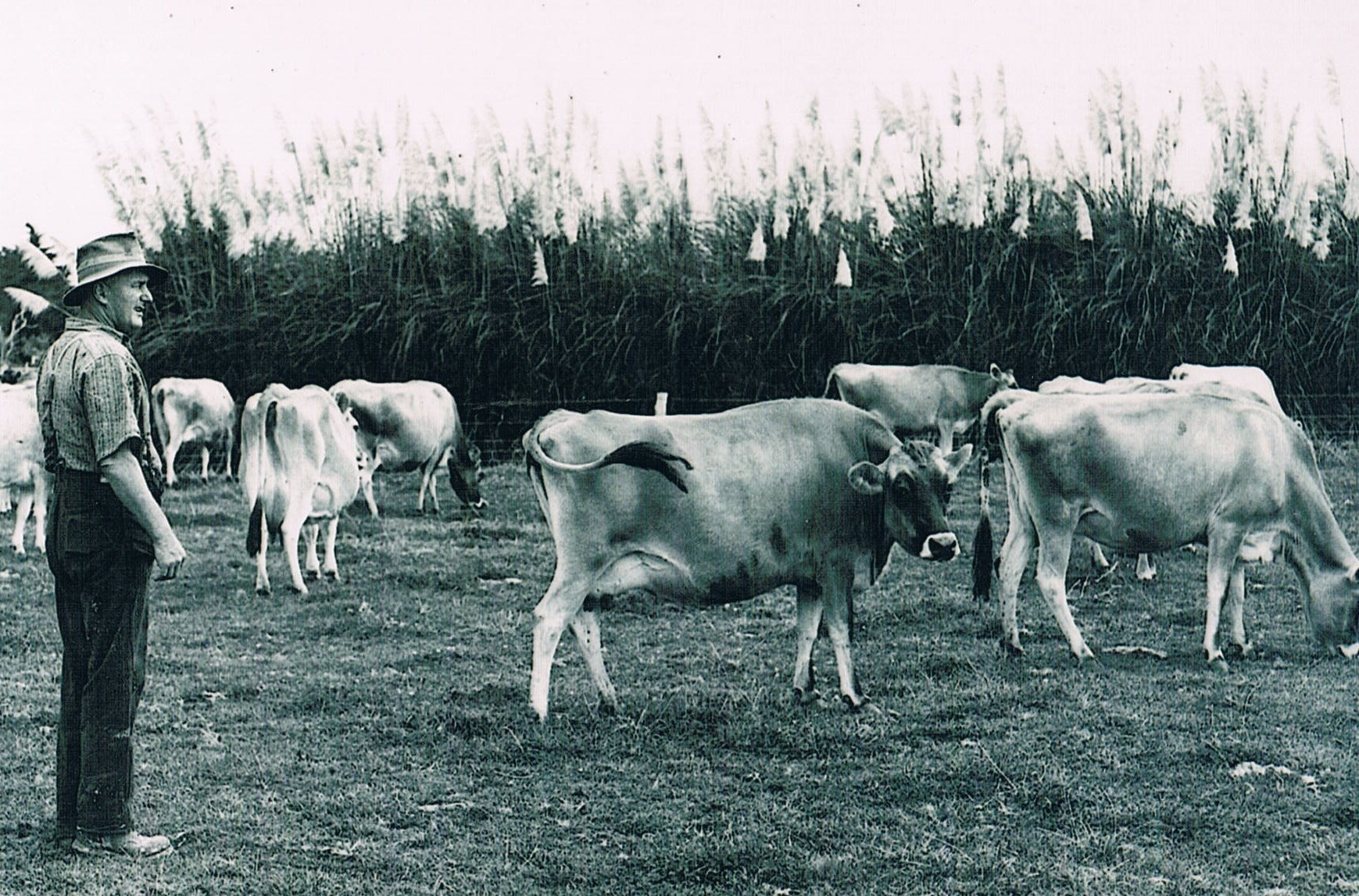
Ted Blake 1656 – 1957
The connection between the Brewster family and this farm stretches back decades. Angela’s parents first arrived on the property when she was just three years old. At that stage the land was a runoff block rather than a fully developed dairy farm. Over time they transformed it into a productive dairy operation. Angela grew up in the same house she still lives in today, watching the farm evolve as her parents expanded and improved it.
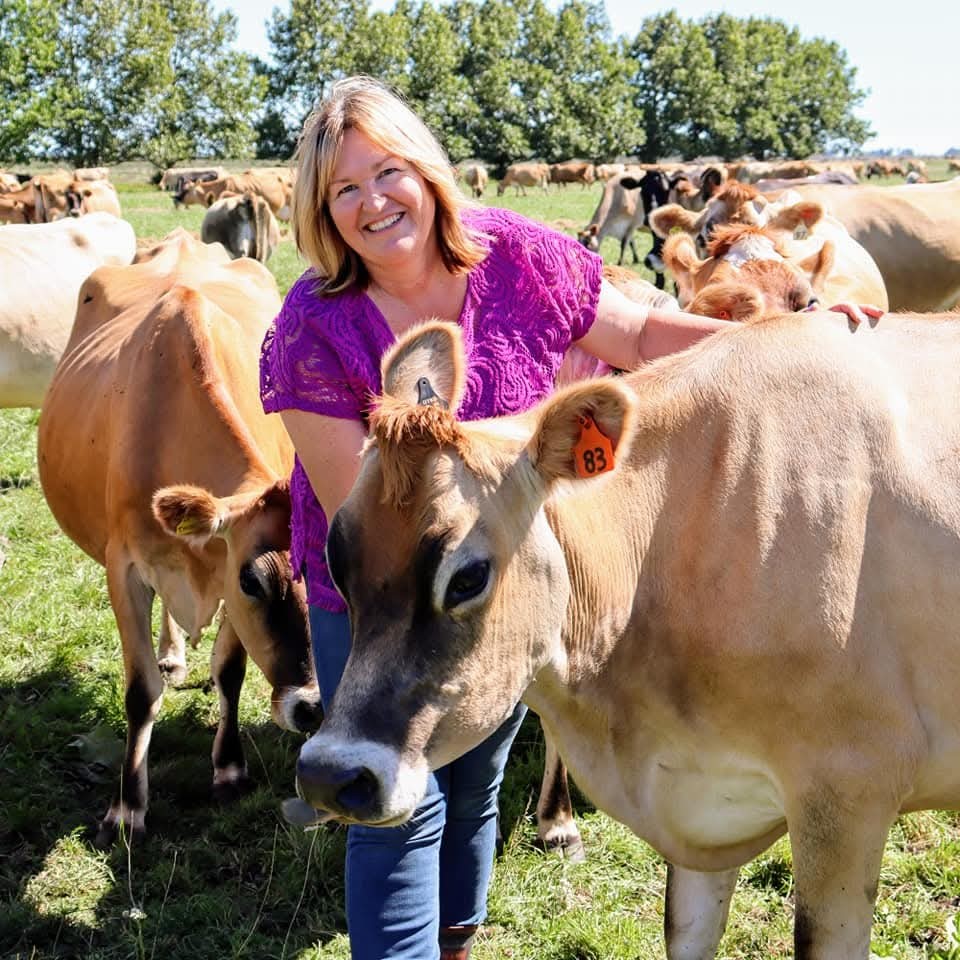
Angela
The connection between he Brewster family and the Jersey breed goes back even further. Philip’s great-grandfather had the Greentoft stud at Ngatea; and his great-grandmother’s uncle had the Hurdon stud back in the late 19th century.
After sharemilking in Elstow, Angela and Murray returned to the farm in 1987 as sharemilkers themselves, continuing the cycle of development and investment that has shaped the property ever since.
Today the Brewsters milk around 340 cows, approximately 95 percent of which are Jerseys, with the remainder being crossbred animals. The focus on Jerseys reflects the family’s long-standing commitment to the breed and its strengths in efficiency, fertility and milksolids production.
The farm itself is entirely flat and benefits from the canal system that protects the property from major flooding events. Average rainfall in the area is around 1150mm annually, with a pattern of summer dry and winter wet.
Despite the potential for summer dry conditions, the soil on the property offers some advantages compared with other parts of the Hauraki Plains. The land does not carry the heavy marine clays found elsewhere in the district, meaning the farm tends to be more resilient in the wet and recovers more quickly after dry periods.
The Little River herd has delivered strong production results in recent seasons. In the 2024/25 season the farm recorded a production record of 133,000 kilograms of milksolids, despite switching to once-a-day milking from Christmas. The current 2025/26 season is tracking close behind, with production expected to reach around 130,000 kilograms of milksolids.
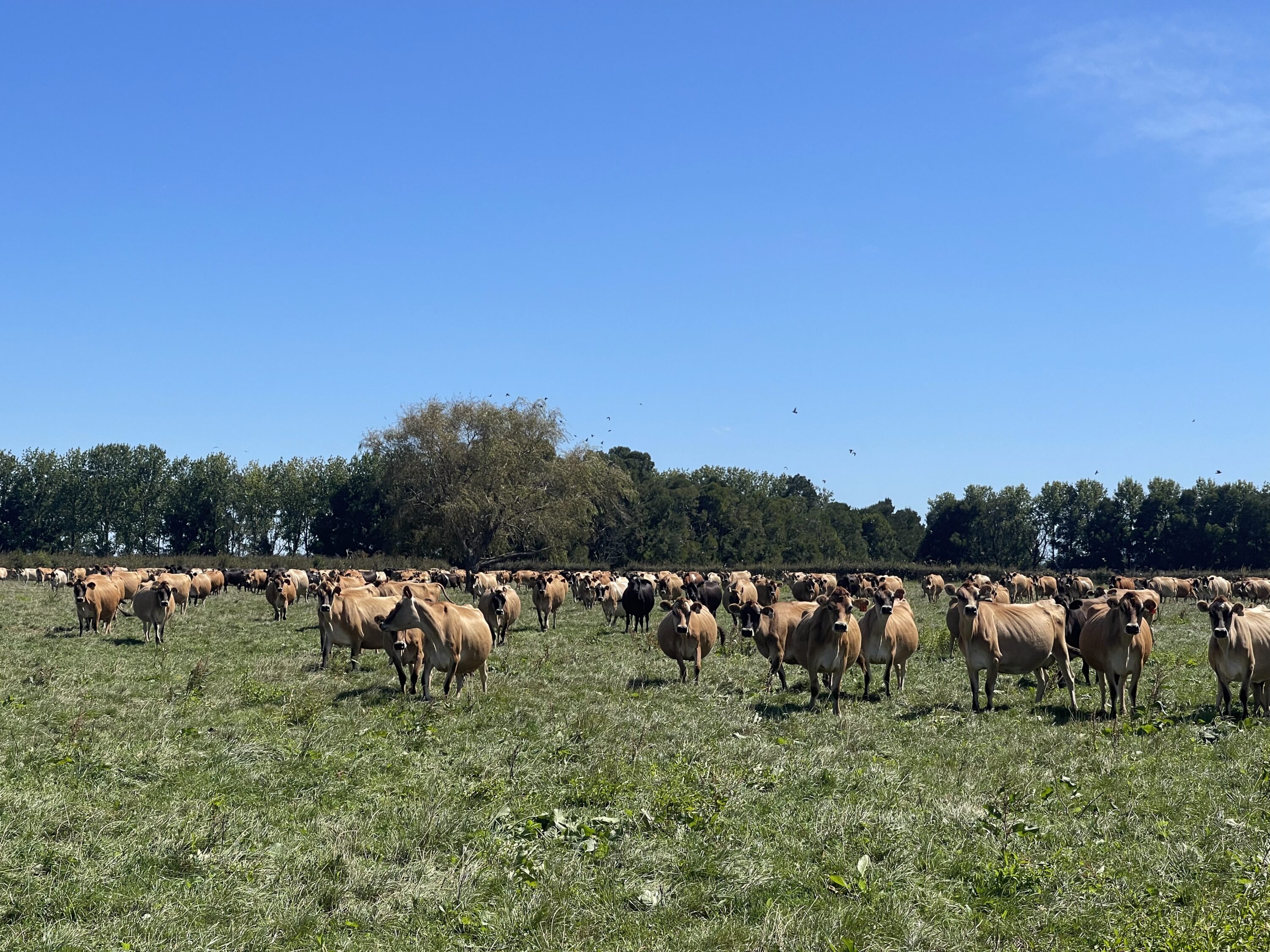
Little River Herd
The feeding system on the farm remains relatively simple and pasture-focused. Cows receive approximately one kilogram of supplementary feed per milking in the shed, primarily a palm kernel blend used largely as a mineral carrier. This is fed throughout lactation. Beyond that, the diet consists of pasture, grass silage and hay. Silage is typically fed from January through to May, while hay is provided during the winter months from June through September. All supplementary feed is produced on the farm and runoff blocks.
Wintering is split between the main farm and the runoffs. Around 100 cows winter off the milking platform, while the remainder stay on the home farm. Angela and Murray manage the calf rearing programme, with calves spending their first couple of weeks in sheds before being split into three mobs. Two of those mobs are raised on the nearby runoff block. After weaning all calves shift to the further runoff before returning to the local runoff block in January ahead of calving.
Breeding decisions at Little River Jerseys are driven by a clear objective: efficient, functional cows capable of performing well in a commercial system. Improving udders and type also remain a clear focus.
When selecting bulls, the process begins with ranking by Breeding Worth (BW). From there, Philip considers several additional traits including udder quality; capacity; size; fertility; and longevity. Physical structure is also important, looking for wide rumps and avoiding high pins. Traditionally the Brewsters have placed strong emphasis on capacity, something that is now clearly visible throughout the herd.
Several bulls are currently having a noticeable impact within the Little River herd. These include Glenui Degree Hoss ET; Little River Nucleus S3J; Puketawa King Carrick JG; Little River Trident S3J; and Glanton Desi Banff.
Looking ahead, the Brewsters plan to continue using a mixture of proven and emerging genetics. Planned mating sires include Paynes Titus Excelsior along with bulls sourced through the Matriarch breeding programme and young bulls from the Jersey Future team.
The Brewsters prefer a balanced approach to genetics, combining the best proven bulls with selected young sires. Philip is comfortable using young bulls as part of the breeding strategy, although he recognises that it involves some risk. Little River Jerseys was an early adopter of genomic technology, but the early years did not always deliver the expected results.
The breeding programme also occasionally includes overseas genetics, with some Danish and North American sired heifers in the herd.
The mating programme at Little River Jerseys follows a carefully structured tiered system. The bottom 10 percent of cows are mated to beef, with no intention of keeping the resulting calves. The next 50 percent are mated to Matriarch bulls, The top 40 percent are mated to a selection of proven bulls and Jersey Future sires, with female calves retained as replacements.
The heifers are no longer AB mated, Philip has found he is getting better fertility results from Matriarch bulls that get swapped between the breeders. The top 50 percent of female calves from the heifers are retained as replacements.
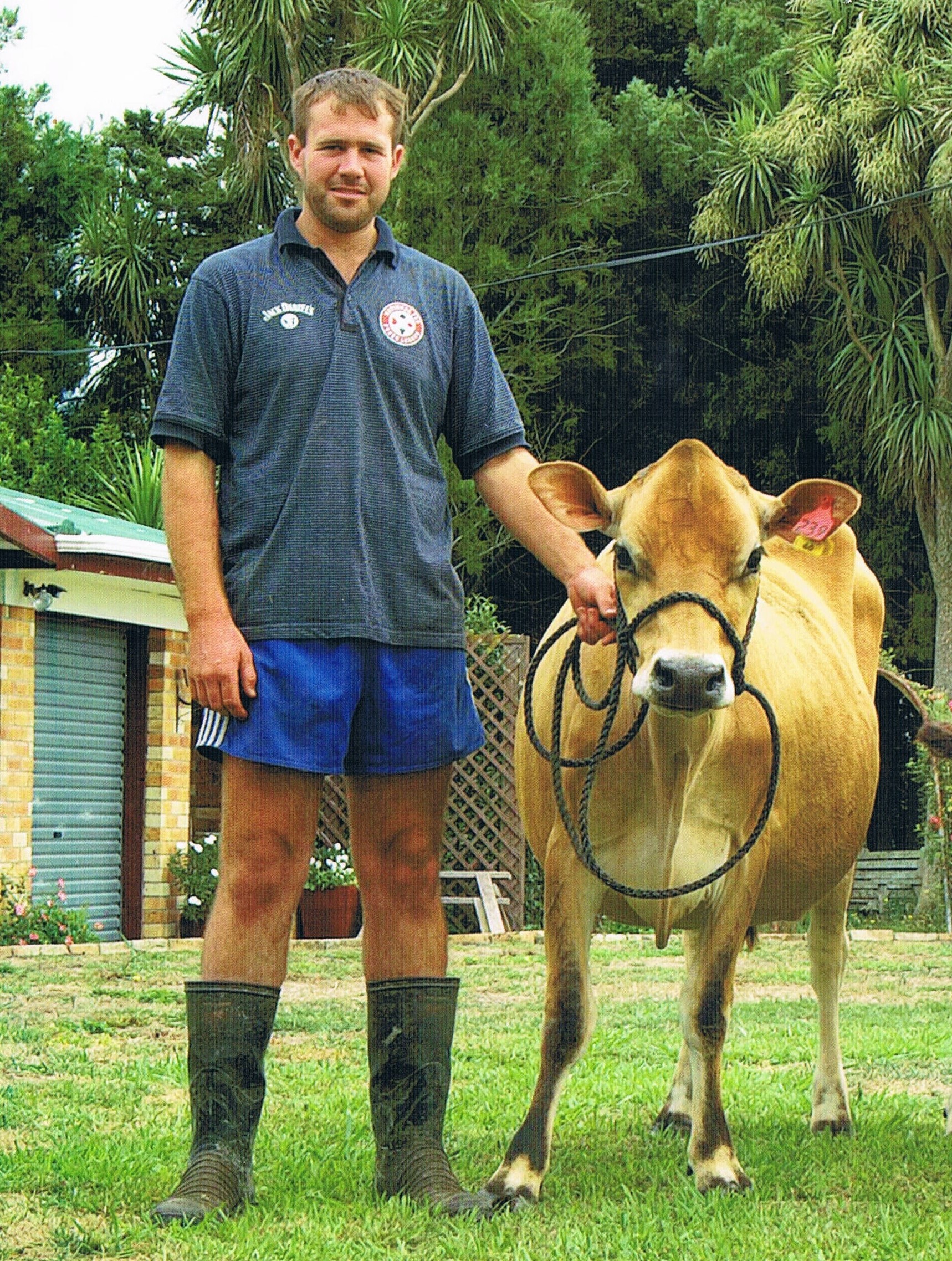
Philip Brewster
Interestingly, the Brewsters also keep a significant number of bull calves from the heifers, with three in the last two years being marketed by Matriarch. Each year around 20 to 25 bulls are reared with some for sale at the Thames Valley bull sale, while approximately 80 AB-sired heifer calves are raised annually in total. Any surplus calves are sold at four days old, and Philip says finding a market for them has never been difficult.
The Little River herd has been built through a combination of careful selection and strategic purchases from some of New Zealand’s leading Jersey studs. Over the years Angela and then Philip invested in top females from a range of respected herds, including Burnwood, Ashdown, Staracre, Cardrona, Thornwood, Konui Glen, Shinarro, Pukeroa, Okura, Braemore, Willesden, Crescent, Marsden, Hillstar, Williams, Kaitaka, Roma and Posterity.
Many of these purchases were among the best cows available in those herds at the time. The influence of those genetics remains evident today, with descendants of those foundation animals still present throughout the Little River herd.
Little River Jerseys has also contributed to the Jersey industry through the breeding of several proven bulls. The first major success was Little River Nirvana, a sire that established the herd’s reputation for producing quality genetics. One of Nirvana’s daughters achieved international show success, highlighting the strength of the breeding programme.
Other proven bulls bred from the herd include Little River Mozart; Little River Trident S3J; Little River Nucleus S3J; and Little River OI Samurai. These sires have helped spread Little River genetics beyond the farm gate and into the wider Jersey population.
Little River Jerseys borders one of New Zealand’s most significant natural wetlands—the Kopuatai Peat Dome. This vast 10,000-hectare wetland is the largest restiad peat bog in the country and has international recognition for its ecological importance. The bog is dominated by native rush species from the Restionaceae family and provides habitat for more than 50 bird species, including the Australasian bittern, banded rail, marsh crake and North Island fernbird. Researchers from the University of Waikato regularly access the wetland through the Brewster property to conduct scientific studies.
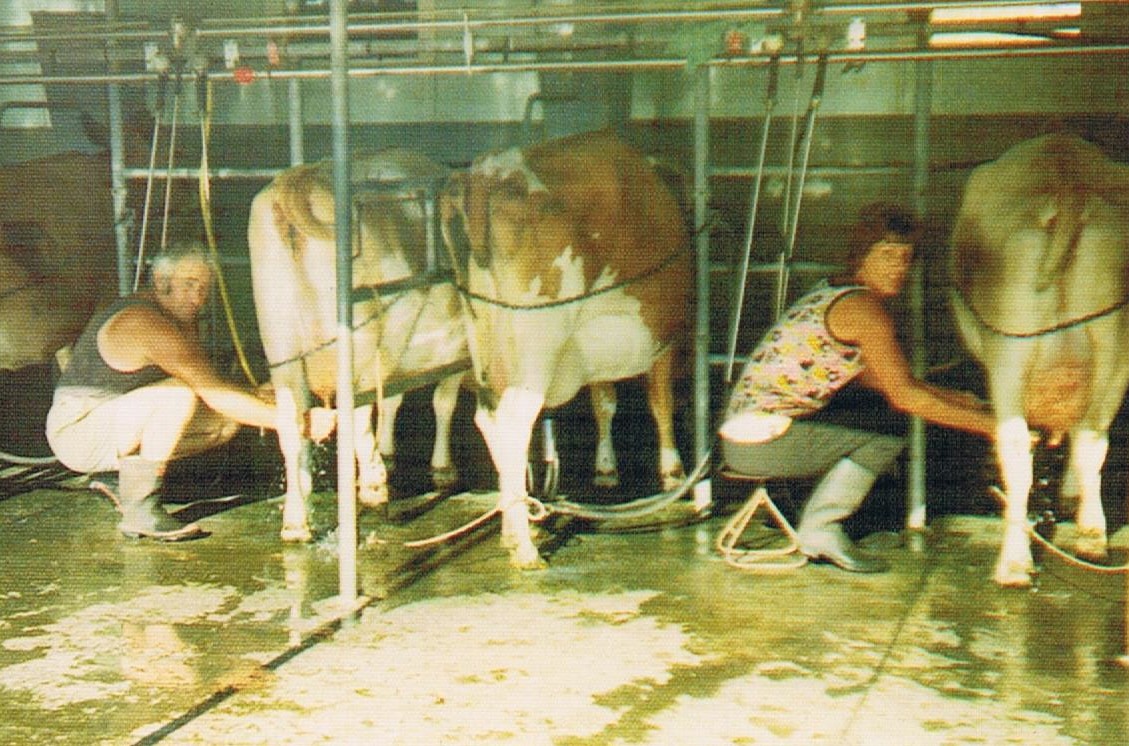
Angela’s Mum (Sylvia) & Dad (Arthur Blake) 1977
Living beside such a unique ecosystem has its advantages and challenges. The wetland acts like a giant sponge, capable of holding significant volumes of water. However, during major events such as the Piako River flooding in 2018, it can also push water back toward the farm when flood protection systems elsewhere fail. The farm relies on the regional flood flood protection system of canals, flood gates and pumps and in most situations they can clear water from the property within a day or two.
The farm’s location also means it has only one neighbouring property, with the canal and wetland forming natural boundaries on three sides.
Away from the dairy shed, the Brewster family remains strongly connected to their local community. Janna Brewster works as a primary school teacher at Hikutaia School, located between Paeroa and Thames. Meanwhile, Philip and Janna are proud parents of two sons.
Jonathan, aged 20, is following in his grandfather’s footsteps as a line mechanic, while 18-year-old William is currently working on a chicken farm. Both sons continue to live at home while establishing their careers.
In his spare time Philip enjoys outdoor pursuits such as hiking, hunting and fishing—activities that fit naturally with the rural environment he grew up in.
Philip’s involvement in the Jersey industry extends well beyond the farm gate. He currently serves as a director of JerseyNZ, having been elected to the role in 2025 for a four-year term. Before that he spent a year as an Associate Director and was previously a member of the JerseyNZ Youth Council.
Philip is also Chair of the Genetic Stakeholder Group and serves on the Jersey Advantage Commercial Influence Committee. He is a director of Matriarch Genetics, a group of bull breeders working together to gain greater control over their intellectual property and the marketing of their genetics.
While the immediate focus for Little River Jerseys is the construction of the new milking shed, the Brewsters are also considering longer-term opportunities. One possibility is the purchase of neighbouring land that would allow them to connect one of their runoff blocks directly to the main farm. Such a move could improve efficiency and simplify the farm system.
For now, however, the priority remains completing the new shed and ensuring the operation continues to evolve in a way that supports both family and farm.
Little River Jerseys is a farm shaped by dedication, careful breeding and the strength of family partnerships. From Angela’s childhood on the property to Philip’s leadership roles within the Jersey industry, the Brewster story reflects the enduring value of long-term commitment to both land and livestock.
With a new generation taking on greater responsibility, modern infrastructure on the horizon, and genetics that are already making an impact beyond New Zealand’s shores, Little River Jerseys looks well placed to continue its contribution to the Jersey breed for many years to come.
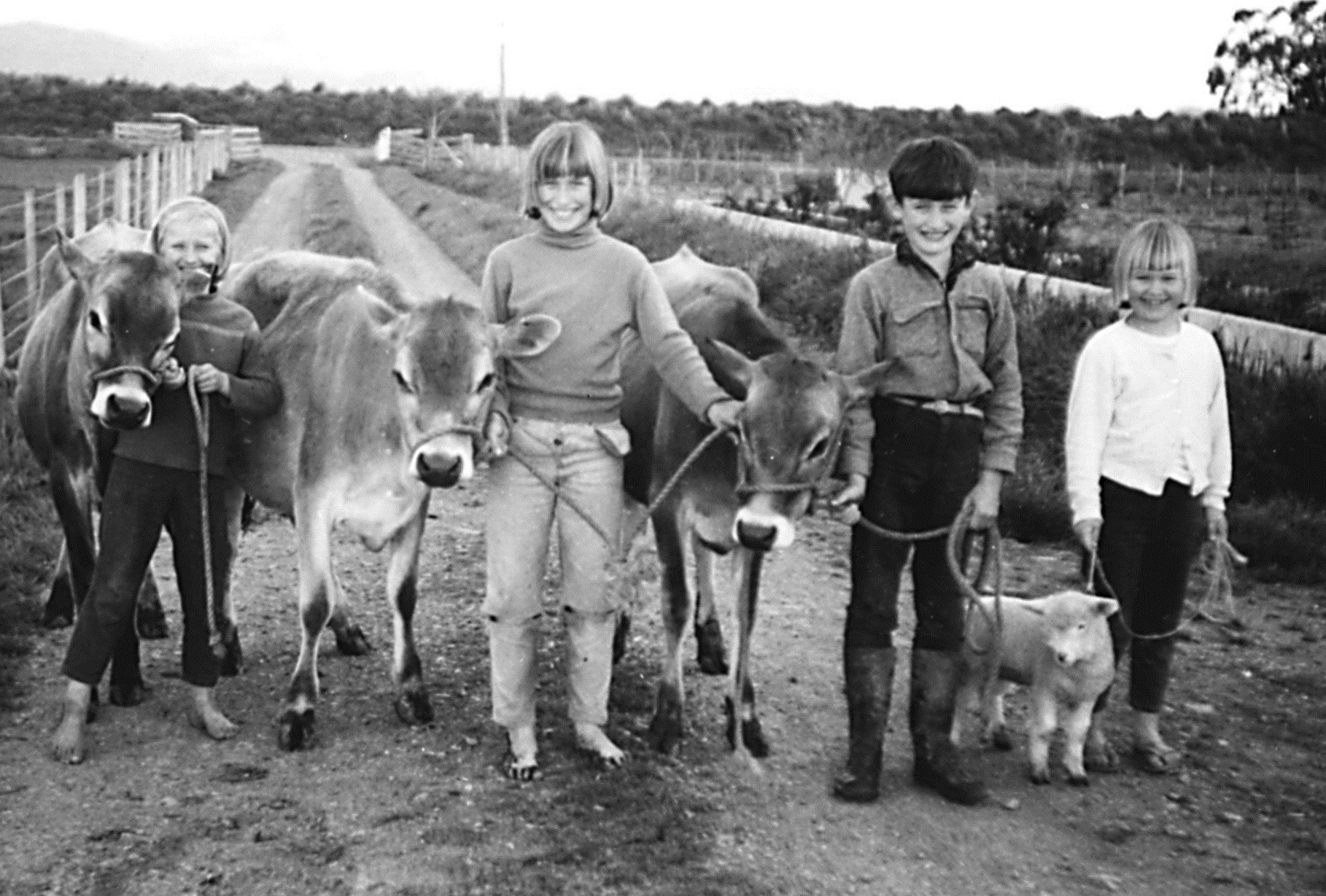
Angela (Right) & siblings Awaiti Canal Rd farm 1967 – Copy